
AI Based Voice of Customer with Specific Actions to Improve Your Business KPIs
Author: Zehra Cataltepe
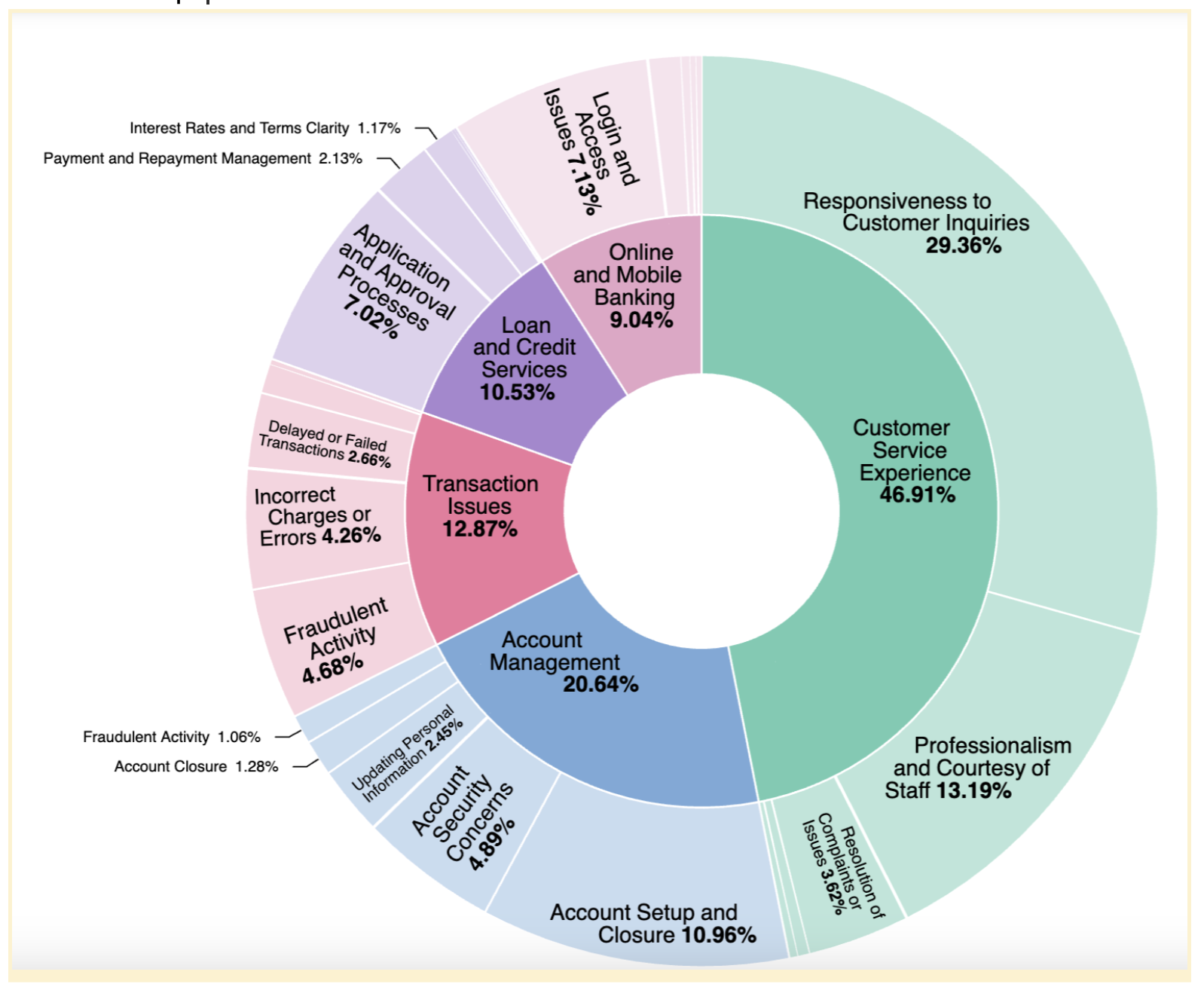
Example Topics and Subtopics in Customer Communications of a Bank
Dynamic nature of business, uncertainties in the AI systems and regulations require humans to be in the loop for success of AI based solutions in production. In this article, we deep dive into what business users should particularly be doing to be in the loop and also to improve their KPIs. We also list the requirements on the AI system for a working system. In this article, we focus on the Voice of Customer solution.
Every organization wants to and have to listen to their customers. Yet, most voice of customer solutions live in different systems and give different insights about what the customer needs. These systems do not speak the language of the marketing, product, customer support and sales teams, to allow them to take actions to improve the customer satisfaction. As business, product, competition and customer needs evolve continuously, these teams need a solution that will speak with them in a language that will help them. AI implemented in an accessible, easy to use fashion is here to help the business teams.
In our voice of customer solutions, we collect data on what customer is saying from a variety of sources: emails, web and app forms, chats, google, yelp, Reddit, BBB, and domain specific review sites, e.g., for finance, wallethub, trustpilot. Then we use easy to understand editable prompts to determine, sentiment, topic, subtopic and complaints severity. In case you do not want your customer data to get out, local and open LLMs (Large Language Models) we use do a great job with the right prompts, few specific examples or if necessary fine-tuning.
We find out that the marketing, product, customer support and sales teams need the following to be EASY when they use their Voice of Customer Solutions:
- Overall use
- Rich prompt editing capabilities
- Checking the results and giving feedback
- Putting the updated system into production
- Monitoring the results continuously
- Relating communication sentiment, topic, subtopic and complaints to insights that will lead to actions, business KPI improvements and eventual growth, i.e. revenue increase
- Continuous ROI calculation
- Adding new data sources
- Monitoring competition’s voice of customer
Requiring the business teams to become half data scientists, through Python classes or general AI classes do not really work. However, connecting ease of use with accessibility, adaptivity of solutions and links to actions and business KPIs, definitely works.
Subtopics, that break down topics into better descriptions of what is wrong, who needs to fix it, how, to be really important. As a matter of fact, you should always monitor the most frequent and recent positive and negative sentiment subtopics for your company and also the competitor:
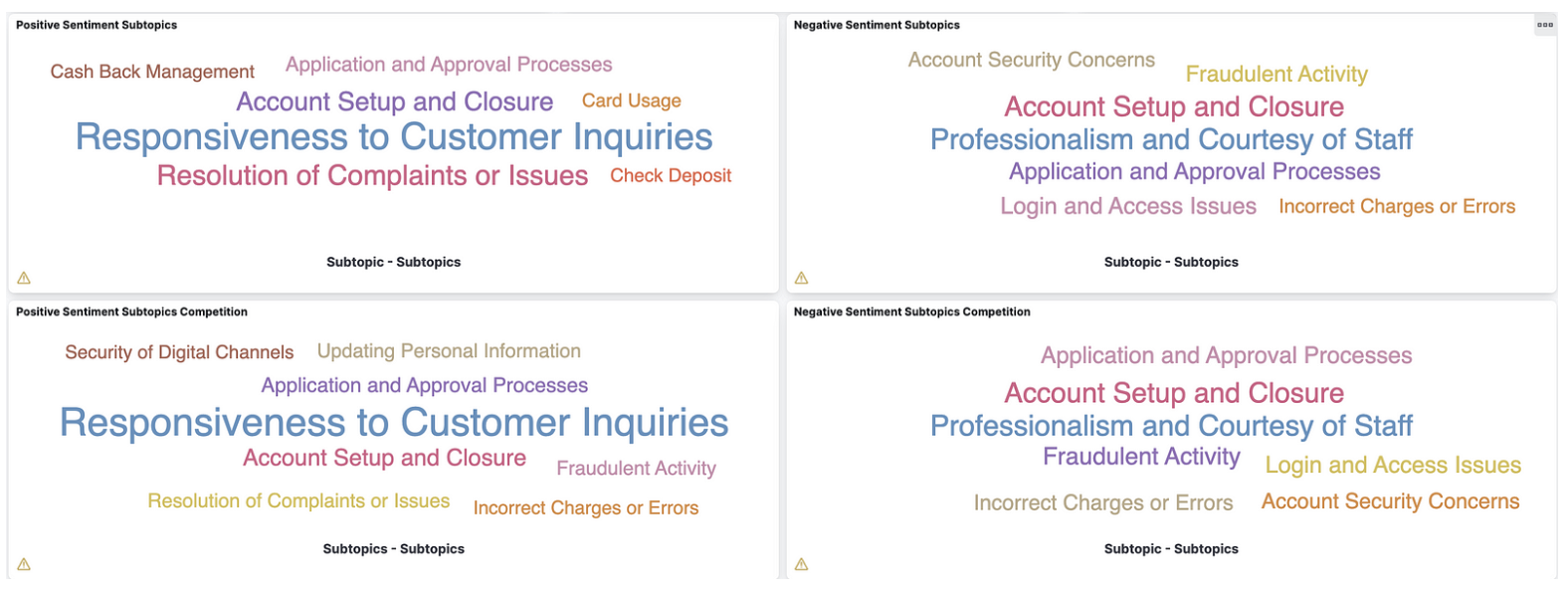
TAZI’s AI Agents take these positive and negative subtopics for your company and competition and create specific actions, reasons behind them and potential business KPI and revenue improvements. They could also do more based on your needs.
For example:
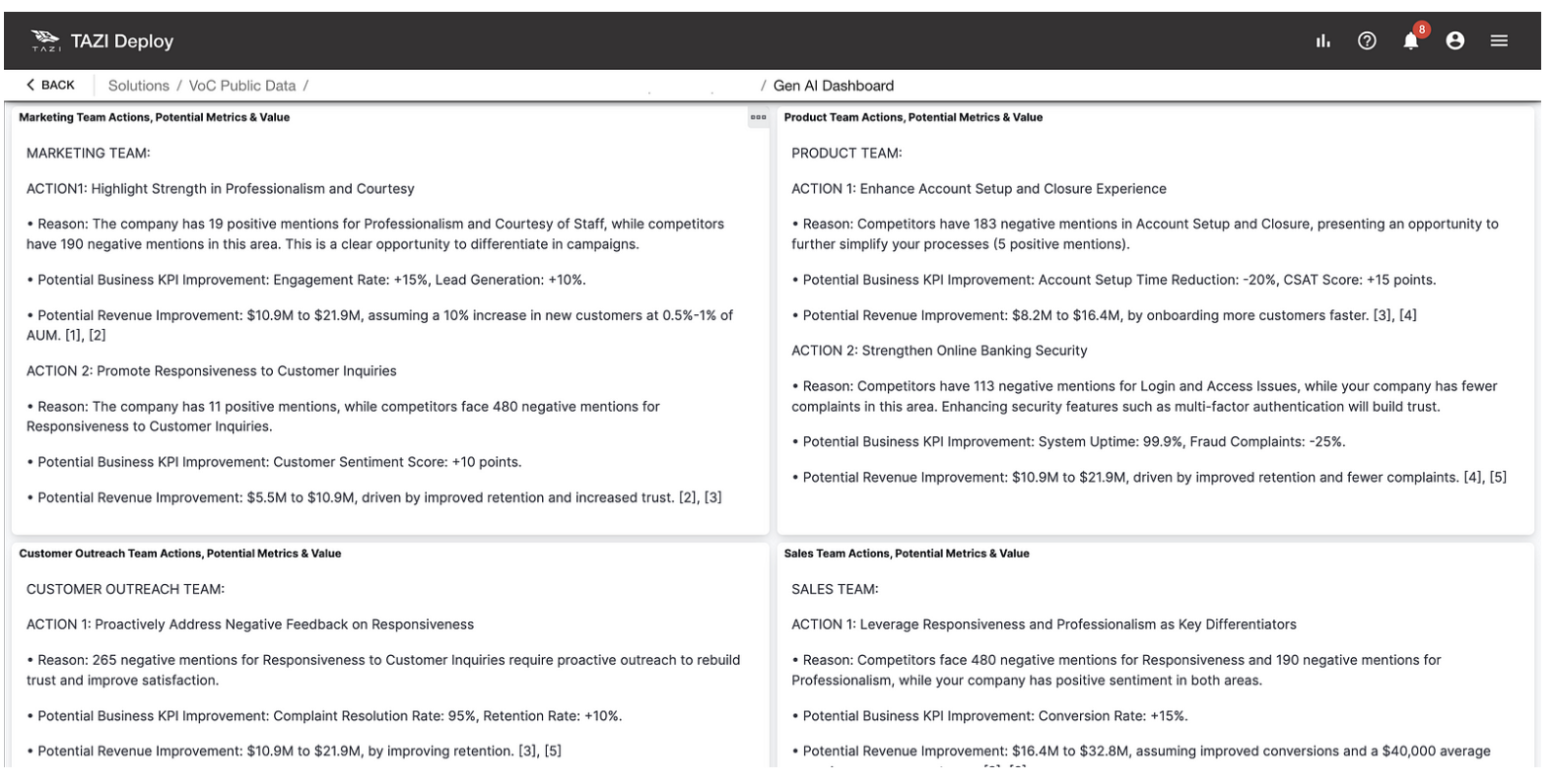
Actions recommended, Reasons, Potential KPI and Revenue improvements. The actions are based on the subtopics of communication of your customers and your competitors’ customers and they can be updated continuously as the VoC evolves.
We are all here to serve our customers and have to listen to them to serve them best. AI allows you to not just to listen to your customer at-scale and rapidly, but also identify how to increase KPIs of each of the customer facing teams, namely, the Marketing, Product, Customer Outreach and Sales teams. With the advents in the ease of use of the AI solutions, you can actually create/configure, put into production, monitor and update these solutions without taking any time from the data science teams and with very little help from the IT teams.