Continuous Monitoring with the Right AI Tools
The first line decides. The second line has to prove those decisions were right, on every case, every month, without operating the process. One deployment can serve both, whichever line adopts it first. TAZI Team · September 11, 2026 · 4 min read
TAZI Team
Every AI deployment in a financial institution has two customers. The business wants a better decision, faster. The independent risk function wants evidence: was the decision within appetite, is it drifting, which population is treated differently, and can we show a regulator why. Most AI pilots stall in this process.
1. First line, second line
The first line is the business and its embedded control team. It owns the process and the controls, runs the RCSA, remediates its own issues. Its KPIs are operational, volumes, error rates, losses, open issues, and its data is granular: every transaction, alert and call.
The second line is Independent Risk Management: operational risk officers, compliance, and in some large banks a centralized independent testing team that has taken control testing out of the business. Its job is credible challenge; its KPIs are profile against appetite, indicator trends, testing coverage, repeat findings. Its data problem is the mirror image of the first line's: breadth without depth, roll-ups, samples, self-reported and lagging.
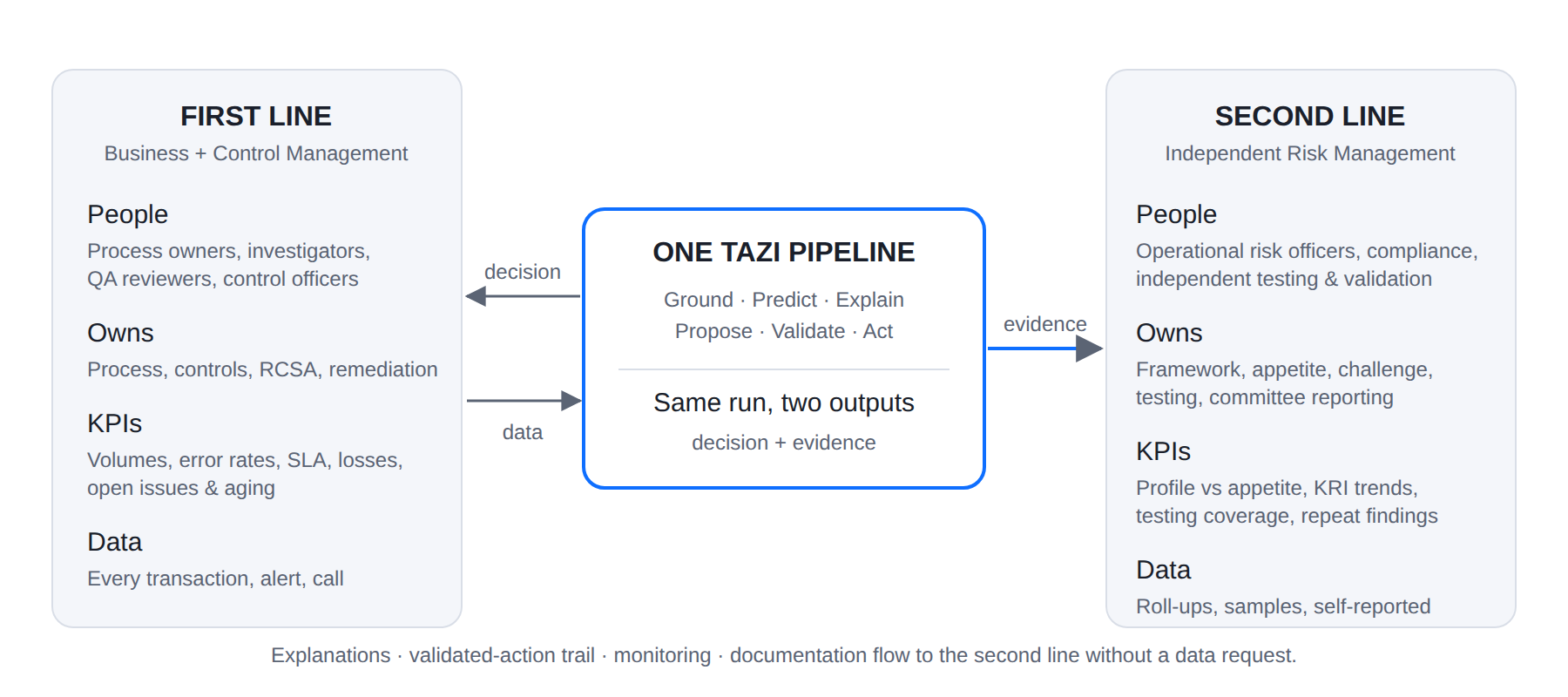
Figure 1. One run, two customers. The first line consumes the decision; the second line consumes the evidence.
2. Key concepts
Decision as data. The system under oversight, an in-house model, a vendor agent, or human reviewers, only has to supply its decisions. TAZI models them, explains them and validates the resulting actions. The second line never rebuilds the first line's logic to challenge it. The business does not need to run TAZI. Second line can be the first adopter, pointing the platform at the systems and reviewers the business already operates.
Evidence as a by-product. Explanations, the validated-action trail, segment-level measurement, monitoring and documentation come out of every production run. Nothing is reconstructed afterwards, and no second model enters the inventory.
Independence through the action layer, not a parallel model. A second-line model trained on the same data makes correlated mistakes with the first line's. Independence comes from separate policy (expert-panel) and client-response (focus-group) checks applied to the first line's actual decisions.
Population, not sample. Challenge and testing run on every case each cycle, holding fixed or dynamic populations in view.
Read the existing use case first; build a new one only for a risk the first line does not measure. Most second-line questions are answered by reading the first line's deployment. When the risk is one the business does not measure at all, concentration or conduct across many businesses, say, the second line defines a new target label and builds on the same governed pipeline. The first path is near-zero marginal cost; the second is a project, and the choice need not be a guess. The questions the second line keeps asking, especially the ones the existing pipeline cannot answer, are the evidence for what to build next (see use case 4).
3. Four second-line use cases
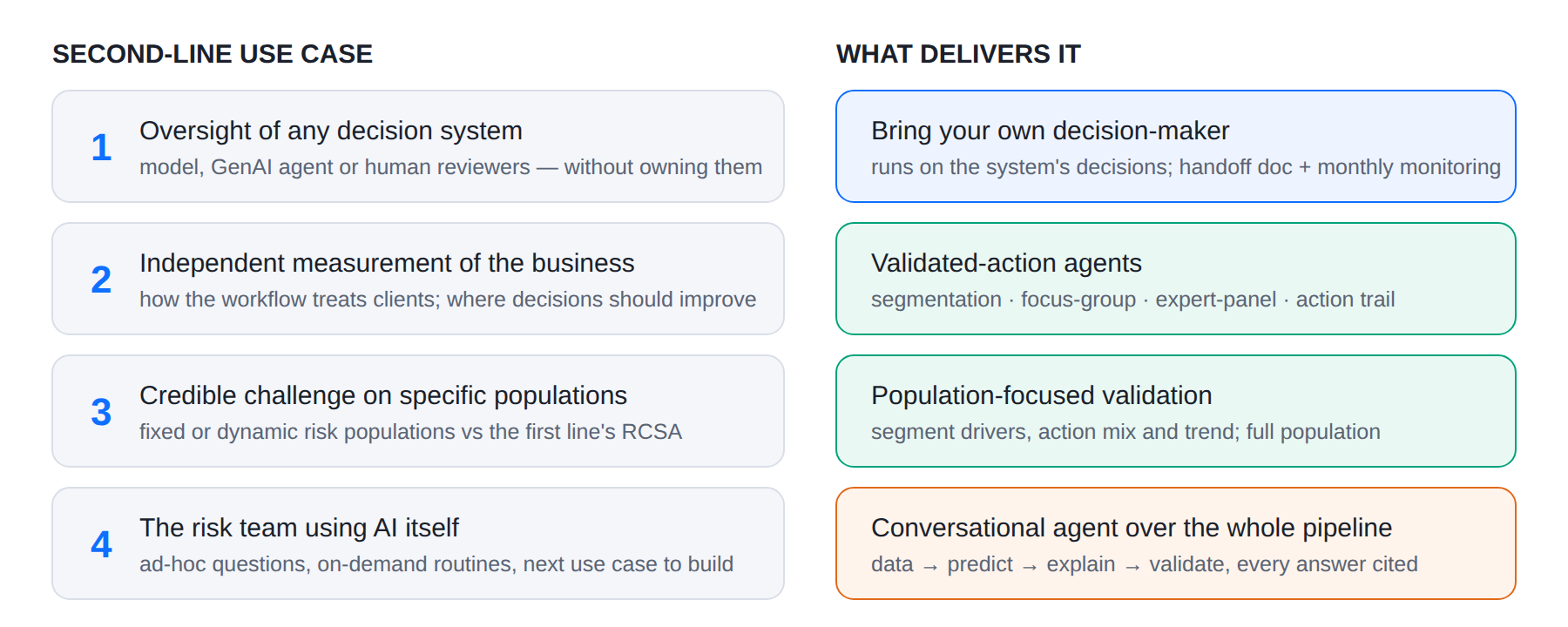
Figure 2. Four second-line use cases and the capability behind each, all on one deployment, whether the business or the second line adopts it first.
1 · Oversight of any decision system. Bring your own model, AI agent or human decision-maker. TAZI runs its full pipeline on the system's decisions and hands the second line what it needs at go-live (performance, fairness verdict, data-readiness) and every month after (health, drift, fairness), without asking the business.
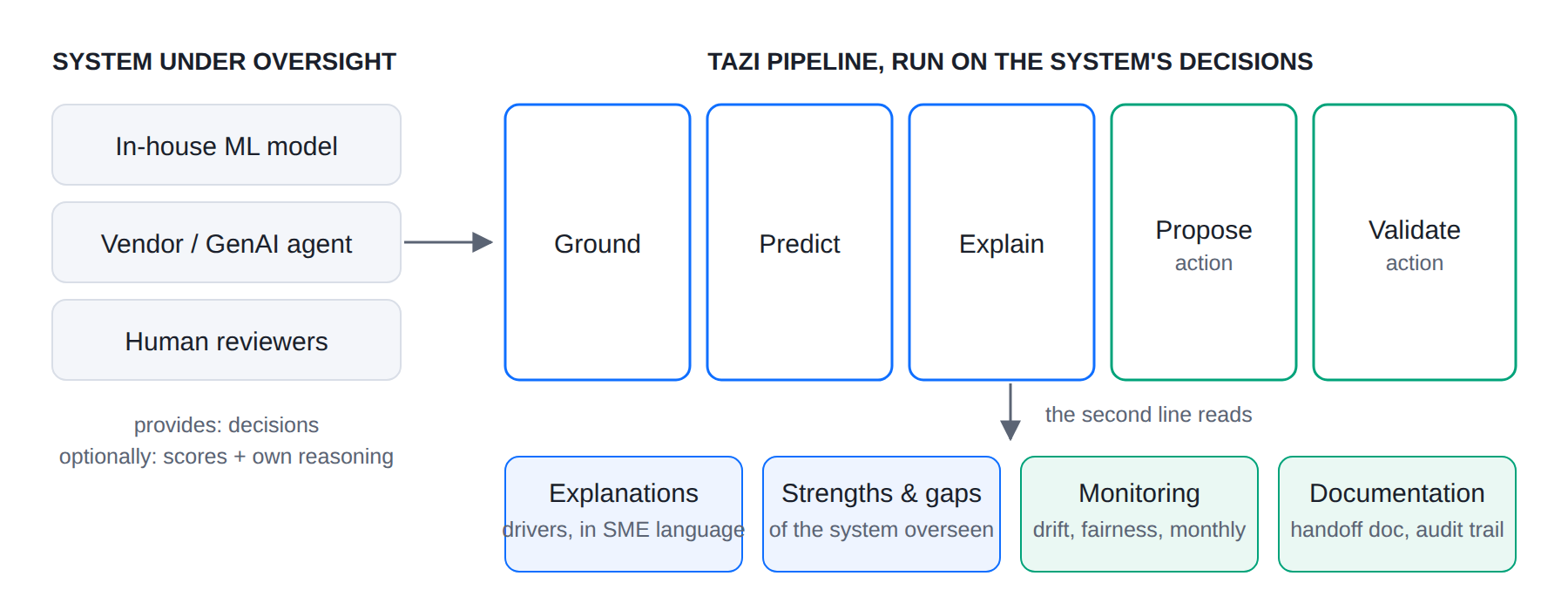
Figure 3. Bring your own decision-maker.
2 · Independent measurement of the business. Dynamic segmentation, focus-group and expert-panel agents model how the workflow treats clients and where decisions should improve. In one AML deployment the expert panel cut tipping-off phrasing in draft escalations from 99% to 0.4%; in wealth retention the focus group cut needless manager alerts from 94% to 42%. Both are policy-level indicators a risk officer can track monthly without touching production.
3 · Credible challenge on the populations that matter. The same validation machinery holds a population in view, fixed (a product under review, one site) or dynamic (a drifting segment, cases where reviewer and model disagree). Set that against the RCSA: a complaints control rated "effective" met a classifier finding that 24% of Level-3 complaints carried no trigger word and 42 were sitting at Level 1.
4 · The risk team using AI itself. A conversational agent over the whole pipeline lets risk officers ask ad-hoc questions ("which functions are trending outside appetite?"), run handoff and monitoring routines on demand, before a committee, after an incident, and execute on confirmation: prepare the escalation, generate the documentation, file the report. The conversation is itself monitored: a recommendation agent tracks recurring questions and unanswered ones, and proposes the next use case to build, with the target label and population already drafted from what the team asked.
The question is not "does the business have a model." It is "can the second line see every decision, explain it, challenge it, and prove what happened."
4. Where it lands
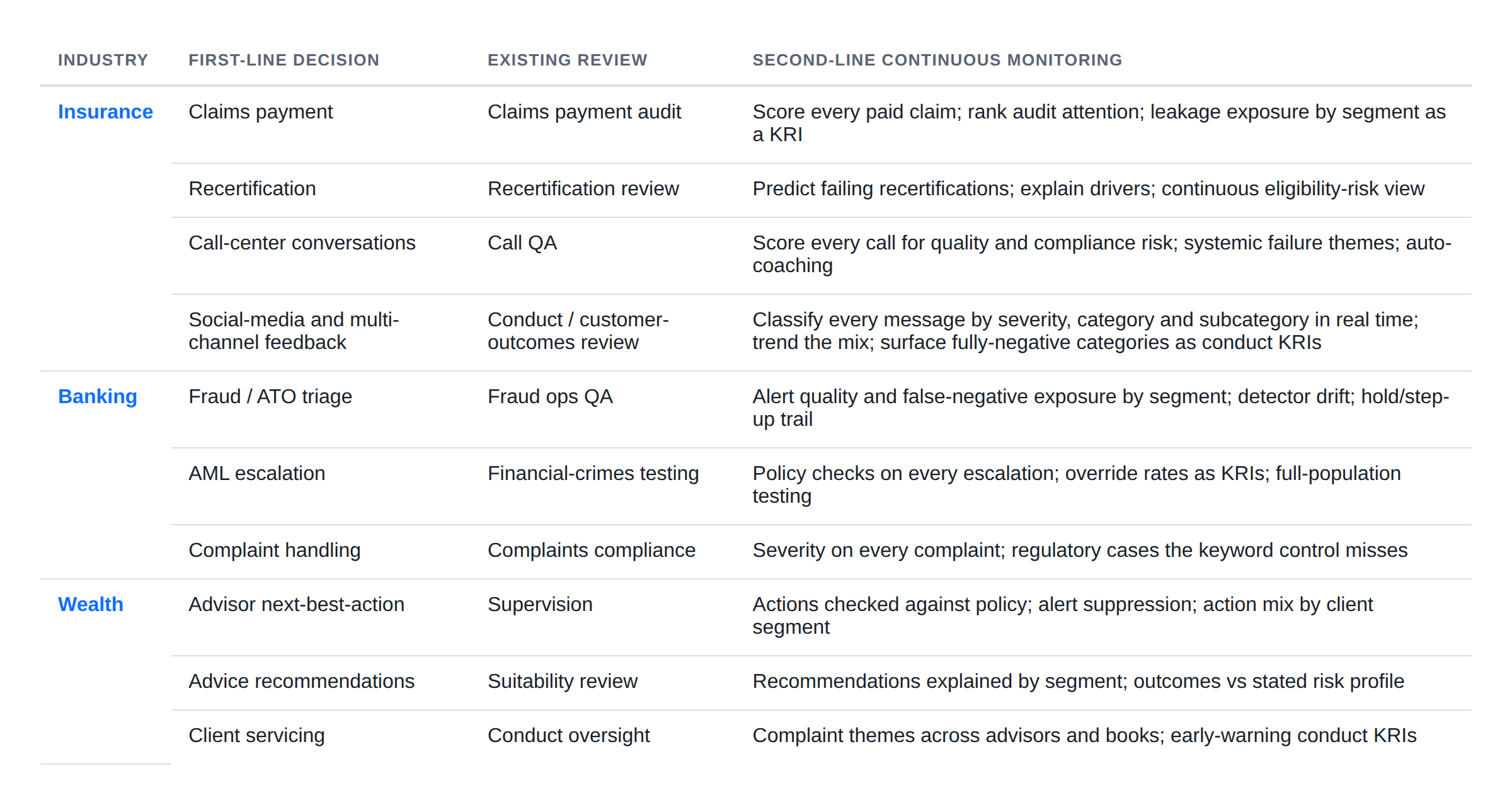
In every industry a review function already oversees the first-line decision by sampling. Continuous monitoring is the same job on the full population.
5. One deployment, two customers
None of this requires the business to change its systems. The business gets a better queue, a cleaner escalation, a coached agent. From the same platform, the risk function gets the explanation, the action trail, the population-level measurement, the monitoring and the documentation it would otherwise request, sample and reconstruct. A front-line solution becomes a second-line solution by producing evidence as a by-product of every decision.
Which of your first-line decision systems can your second line explain, challenge and monitor today — on the full population, without a data pull?
Figures are from TAZI proofs of value and deployments: complaints classification (14K complaints; 24% of Level-3 cases without a trigger word; 42 recovered from Level 1), AML validated actions (tipping-off phrasing 99% → 0.4%), wealth retention validated actions (needless manager alerts 94% → 42%).